Kārtika Pūrṇimā
Kārtika Pūrṇimā · The full moon of lamps, Tripurāri, and the end of Kārtika
Kārtika Pūrṇimā
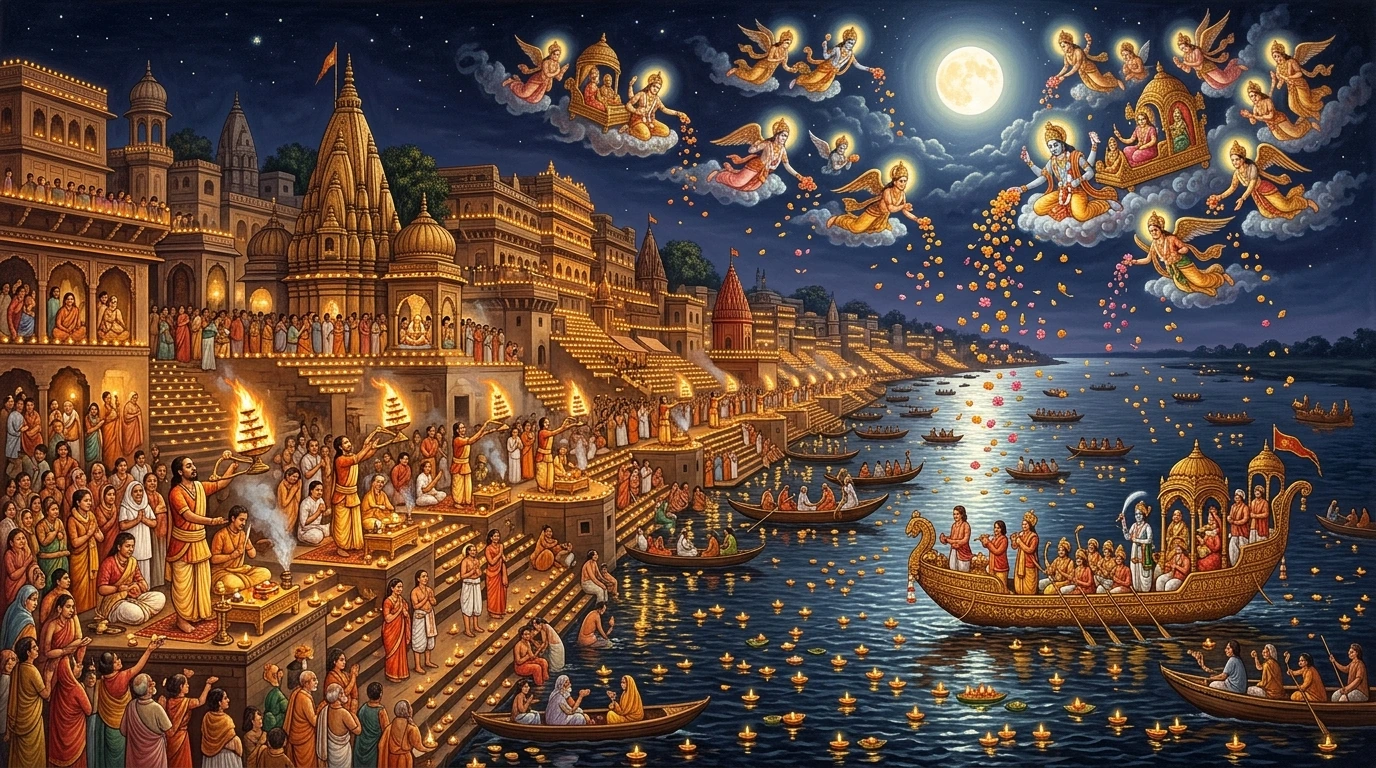
Celebrates the victory of Lord Śiva over the demon Tripurāsura. The gods descend from heaven to the sacred ghats of Vārāṇasī and sacred water bodies at dusk to illuminate the earth with celestial lamps (Dev Dīpāvali).
The Significance of Kārtika Pūrṇimā
The three cities, and a sky full of lamps
Drawing on the Śiva Purāṇa (the burning of Tripura) and the Skanda and Matsya Purāṇas.
Three demon brothers, sons of Tāraka, won by long austerity three flying cities, Tripura, one of gold, one of silver, one of iron, in the heavens, the sky and the earth. The boon that guarded them was a riddle of timing: the three cities could be destroyed only when they aligned into one, and only by a single arrow in that instant. So armed, the Tripura demons grew invincible and oppressed the worlds.
The gods built Śiva a chariot for the task, the earth its floor, the sun and moon its wheels, Mount Meru the bow, Vāsuki the string, Viṣṇu himself the arrow. And in the one moment the three cities aligned, Śiva loosed the single arrow and burned all three at once. As Tripurāri: the enemy of Tripura, he ended them, and the gods, in relief and joy, lit lamps across the heavens. From that the day is Dev Dīpāvali, “the Dīwālī of the gods,” and the ghāṭs of Kāśī are filled with thousands of lamps on this full-moon night.
The same Kārtika full moon carries Vaiṣṇava weight. Kārtika is the Dāmodara month, dearest to Viṣṇu, kept with lamps offered to Kṛṣṇa and the honouring of the tulasī; the month of lamp-lighting closes on this Pūrṇimā. It is also held by some as Matsya Jayantī, the appearance of Viṣṇu’s first avatāra, the fish who saved the Veda and the seed of life through the flood. And it is the birth of Kārttikeya, the warrior-son for whom the whole month is named.
What is done, and why
The signature of Kārtika Pūrṇimā is light, dīpa-dāna, the floating and lighting of countless lamps, on the Gaṅgā at Kāśī, on every river and tank. Devotees bathe at dawn in sacred water (Kārtika snāna), give in charity, and close the month’s lamp-offering. It is among the most meritorious bathing-and-lamp days of the year.
How it is kept
Kārtika Pūrṇimā falls on the full moon (Pūrṇimā) of Kārtika, fifteen days after Dīpāvali, the close of the lamp-lit month.
Why it is kept
The day gathers every meaning of light: Śiva’s single arrow that ended the three cities, the gods’ answering lamps, the close of Viṣṇu’s dearest month of lamp-offering. Where Dīpāvali lit the earth, this full moon lights the heavens, the year’s longest conversation in lamps drawing to its end.
Source: The burning of Tripura is told in the Śiva Purāṇa; Dev Dīpāvali, Matsya Jayantī and the Kārtika observances draw on the Skanda and Matsya Purāṇas. Available at wisdomlib.org.
How it is observed
Lamps are floated on rivers (Dev Dīpāvali); a high day for the Kārtika bath and charity, sacred to both Viṣṇu and Śiva.
- Take a sacred bath in a river, pond, or with holy water at dawn.
- Light rows of earthen lamps (Dīpa-dāna) at sunset along riverbanks, temples, and under the sacred Tulasī plant.
- Offer 365 cotton wicks soaked in ghee, symbolizing light for every day of the solar year.
- Chant the Viṣṇu Sahasranāma or Śiva Stotras under the full moon.
In Vedic astronomy, Rāhu is the shadow node (chāyā-graha) associated with illusion, darkness, and disruption. No new sacred endeavor, pūjā sankalpa, or idol installation (sthāpanā) should ever be commenced during Rāhu Kāla. Ongoing chanting or meditation may continue, but the initial invocation must never begin during this window.
Governed by Yama, the lord of mortality and justice. It is considered unfavorable for establishing enduring auspiciousness and prosperity; hence ritual beginnings and vows are suspended during this hour.