Holī / Holikā Dahan
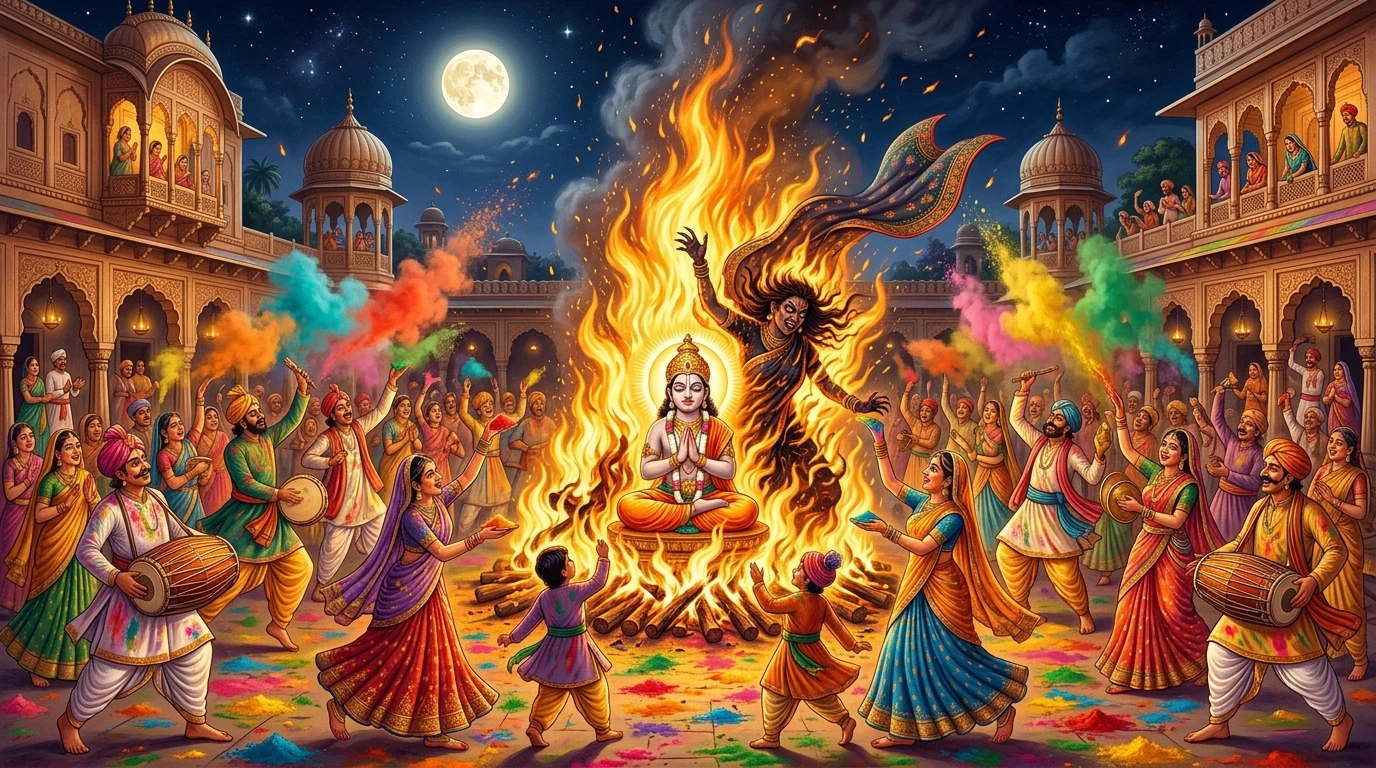
Triumph of Devotion over Demoness Holikā and the Sacred Spring Colors
Sunday, 11 March 1770
From the pañchāṅga
How it is observed
The Holikā bonfire is lit on the full-moon eve (Holikā Dahana), and colours are played the next day. Kept by Vaiṣṇavas as Gaura Pūrṇimā, the appearance of Caitanya Mahāprabhu.
Mīna Saṅkrānti
The Sun enters Mīna
Sunday, 11 March 1770
The Sun crosses at 9:37 AM, your local time
The Sun enters Mīna (Pisces), the last sign, the solar year drawing toward its close before it begins again at Meṣa.
What is done, A day for a bath in sacred water and dāna (charity) during the puṇya kāla, the auspicious window around the transit.
Celestial Coordinates & Muhūrtas
5:23 PM – 6:53 PM
12:53 PM – 2:23 PM
12:29 PM – 1:17 PM
Bearings indicate horizon degrees. Rāhu and Yamagaṇḍa are avoided for new auspicious beginnings; Abhijit is the midday victory window.
Found an error?
ekadasi.day has no ads and no popups. If a date, name, or story reads wrong, please write, accuracy matters more than reach.
mrvi@post.com →·Other ways to help