Parivartini Ekadasi
Bhādrapada · Śukla Pakṣa · Parivartini Ekadasi
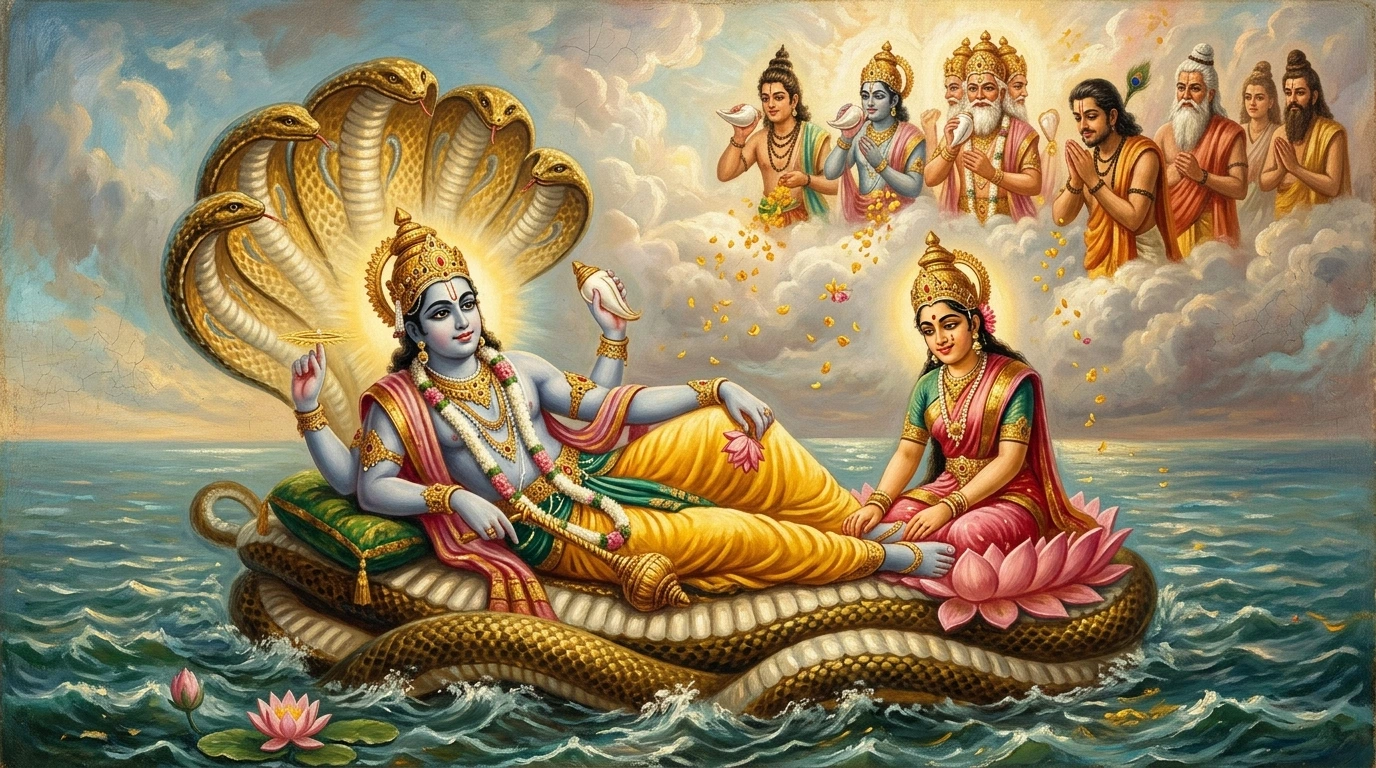
Parivartini Ekadasi
Saturday, September 18, 2010
Break after sunrise (6:08 AM) with Caraṇāmṛta & Tulasī leaf before Dvādaśī ends.
Fresh fruits, milk, nuts, sabudana, water.
Grains, rice, wheat, dal, beans, onion, garlic.
View Astronomical Tithi Timings Table ▾
- Ekadasi tithi
- Sat
- 18 Sep
- 2:49 AM
- Dvādaśī begins
- Sun
- 19 Sep
- 5:04 AM
- Hari Vāsara ends
- Sun
- 19 Sep
- 5:04 AM
- Pāraṇa window
- Sun
- 19 Sep
- 6:08 AM – 9:10 AM
1. Pre-dawn sanctity: Breaking the fast while still dark invalidates the vrata. Always await local sunrise.
2. Dvādaśī adherence: The fast must be broken before Dvādaśī tithi elapses to retain spiritual fruit.
3. Sacred Order: Offer prayers to Lord Viṣṇu, sip sacred Caraṇāmṛta with Tulasī, then partake of light food.

The Legend of Parivartini Ekadasi
The turning of the lord
Preserved across canonical scriptures to dissolve spiritual burdens, bestow clarity, and elevate consciousness.
Immerse in the complete unabridged dialogue, verses & audio.
Read Full Legend→Need guidance on observances? Read the canonical Ekādaśī Fasting Rules : what to eat, what to avoid, the three vrata intensities, and breaking rules (pāraṇa).
Frequently asked
- What is Parivartini Ekadasi?
- Parivartini Ekadasi is the ekādaśī tithi, the eleventh lunar day, of the waxing fortnight (śukla pakṣa) of Bhādrapada. Its name means "the turning of the lord". Like every Ekadasi, it is observed by fasting and remembrance of Lord Viṣṇu. The story and fruits (phalaśruti) of Parivartini are recorded in Padma Purāṇa, Uttara Khaṇḍa, Chapter 57.
- When is Parivartini Ekadasi observed?
- Parivartini Ekadasi falls on the ekādaśī tithi of the waxing fortnight of Bhādrapada (the Hindu lunar month). The exact Gregorian date varies each year because the lunar calendar drifts relative to the solar one. Smārta and Vaiṣṇava observers occasionally fast on different civil days when the tithi spans two sunrises, see the date above for the next occurrence.
- Who is worshipped on Parivartini Ekadasi?
- Parivartini Ekadasi, like all Ekadasis, is dedicated to Viṣṇu (turning on his side). Specific forms of worship vary by tradition: chanting Viṣṇu-sahasranāma, reading the corresponding chapter from Padma Purāṇa, Uttara Khaṇḍa, Chapter 57, hearing the story, and remembering the divine names are all considered part of the observance.
- What is the spiritual fruit (phalaśruti) of observing Parivartini Ekadasi?
- The Purāṇic source declares that observing Parivartini Ekadasi yields: Ends drought; equal worship of Brahmā, Viṣṇu, and Śiva; the king who refused to kill an innocent ascetic. Across all Ekadasis, the underlying claim is the same, the fast aligns the body, breath, and mind with the eleventh lunar day's particular quietness, and bestows merit equivalent to extensive austerities, charity, or pilgrimage.
- How is Parivartini Ekadasi observed?
- A complete observance begins the previous evening with a light, sattvic meal and continues into a fast on Ekadasi day. The fast can be nirjala (without water), phalāhāra (fruits and water), or a single sattvic meal, pick the level your health and discipline allow. Grains, pulses, onions, and garlic are universally avoided on Ekadasi. The fast is broken on Dvādaśī during the prescribed pāraṇa window listed on this page. The day is spent in remembrance, chanting, reading, hearing the Ekadasi story, and avoiding sleep during daylight where possible.
- What is the difference between Smārta and Vaiṣṇava observance of Parivartini Ekadasi?
- On most Ekadasis the two traditions fast on the same day. They diverge only in the rare atirikta case, when the Ekadasi tithi spans two consecutive sunrises. Smārtas fast on the first such day; Vaiṣṇavas wait until the next, preferring that Dvādaśī also touches sunrise. If Parivartini Ekadasi falls in such a fortnight in a given year, the two dates will appear on this page side by side.
Found an error?
ekadasi.day has no ads and no popups. If a date, name, or story reads wrong, please write, accuracy matters more than reach.
feedback@ekadasi.day →·Other ways to help