Putrada Ekadasi (Shravana)
Putradā Ekādaśī (Śrāvaṇa)
Monday, 5 August 2120
Fasting day
Tuesday, 6 August 2120
Fasting day
Bengaluru, India
changeFast on Ekādaśī day. Break the fast strictly during this sacred Dvādaśī morning window with water, fruits, or light sāttvika food.
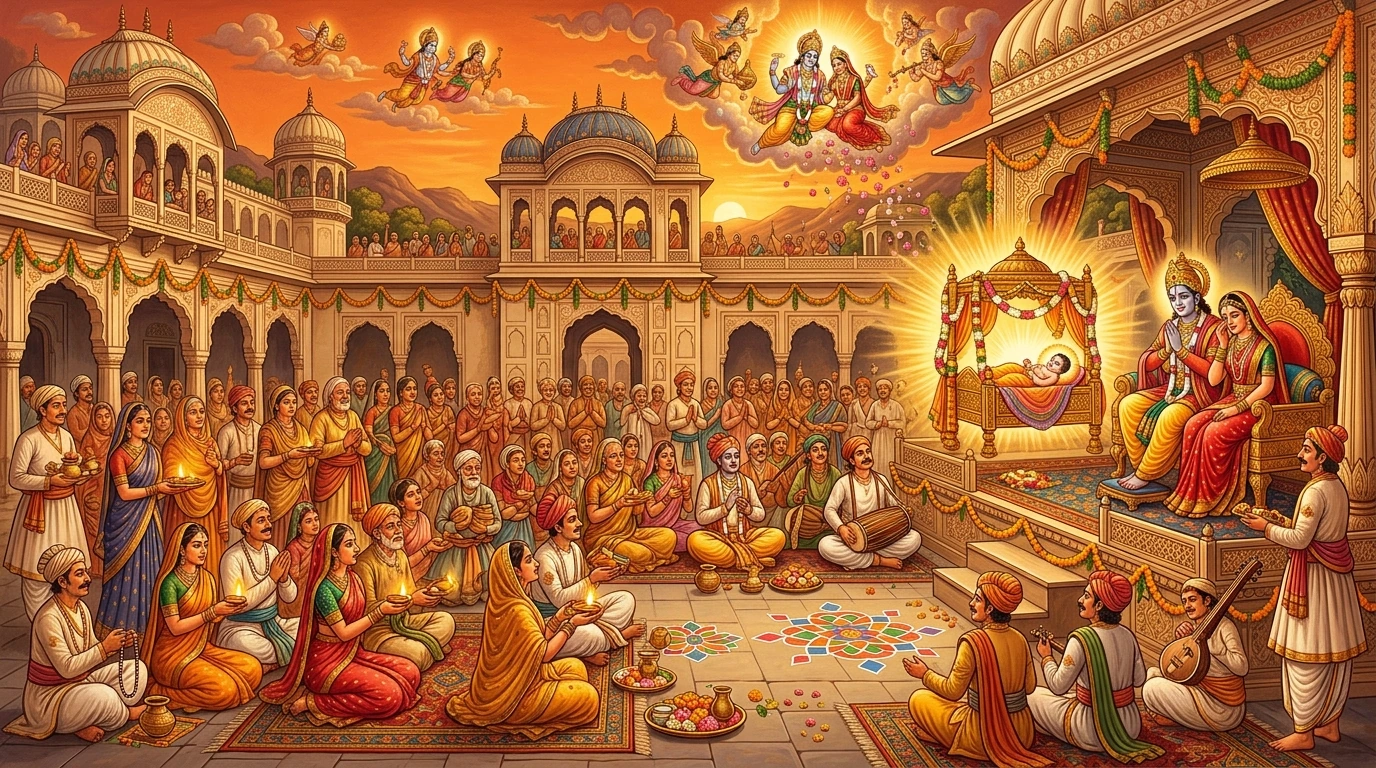
Kingdom of Māhiṣmatī: The pious subjects and King Mahījit celebrate the birth of a noble royal heir granted by the united observance of Putradā Ekādaśī.
*Showing Smārta date – Vaiṣṇava tradition observes on Tuesday, 6 August 2120 →
The tithi begins on Mon afternoon. At that day’s , is still prevailing: so the fast follows the next day, when reaches sunrise.
Many keep a stricter fast from sunset the evening before.
Daily Tithi, Muhūrtams & Horizon
Śukla Pakṣa · Dvādaśī
followed by: Śukla Trayodaśī12:01 PM – 12:49 PM
4:30 AM – 5:18 AM
3:35 PM – 5:10 PM
9:15 AM – 10:50 AM
12:25 PM – 2:00 PM
Bearings indicate horizon degrees. Rāhu, Yamagaṇḍa, and Gulika are avoided for new auspicious beginnings; Abhijit and Brahma Muhūrta are sacred windows for pūjā, chanting, and meditation.
Tuesday, 6 August 2120 (today, in the ancient reckoning)
- Cosmic Time
अद्य · श्वेतवराह कल्पे · वैवस्वत मन्वन्तरे · कलियुगे प्रथम पादे
adya · śveta-varāha kalpe · vaivasvata manvantare · kali-yuge prathama pāde
In Śveta-varāha kalpa, Vaivasvata manvantara, and the first quarter of Kali-yuga, in the eternal presence of the Supreme Lord...
- Calendrical Time
शालिवाहन शके २०४२ · विक्रम संवत्सरे · दक्षिणायने · वर्षा ऋतौ
śālivāhana śake 2042 · Vikrama saṁvatsare · Dakṣiṇāyane · Varṣā ṛtau
In the sacred cycle of the Śaka era, current Jovian year (Saṁvatsara), solar transit (Ayana), and season (Ṛtu)...
- Astronomical Limb (Pañcāṅga) · Pañcāṅga Kāla (Daily Alignments)
भाद्रपद मासे · शुक्ल पक्षे · द्वादशी तिथौ · मङ्गल वासरे · मूल नक्षत्रे · वैधृति योगे · बव करणे
Bhādrapada māse · Śukla pakṣe · Dvādaśī tithau · Maṅgala vāsare · Mūla nakṣatre · Vaidhṛti yoge · Bava karaṇe
In this sacred lunar month, fortnight, lunar day, weekday, birth star, yoga, and karaṇa...
- Sacred Locality
जम्बूद्वीपे · भारतवर्षे*
jambū-dvīpe · bhārata-varṣe (India)
In Jambūdvīpa, the sacred land of Bhāratavarṣa (India)...
*The locality lines (jambū-dvīpe bhārata-varṣe): India is shown by default; spoken aloud you substitute your own region and town.
What You Just Read: The Three Frames of Time▾
What You Just Read: The Three Frames of Time
The saṅkalpa places the moment in three nested dimensions—cosmic, calendrical, and astronomical—so the seeker knows exactly when and where they stand in eternity.
Cosmic Time (Eternal Scale)
Cosmic time doesn’t change with where you read this. Śveta-varāha is the present kalpa (~4.32 billion years). Vaivasvata is the current manvantara. Kali-yuga prathama pāda places us in the first quarter of the dark age. Identical whether recited in Bengaluru, Mumbai, London, or New York.
Calendrical Time (Solar & Seasonal Cycles)
Calendrical time tracks the present era and season: the Śaka era (from 78 CE), the 60-year Jovian saṁvatsara cycle, Uttarāyaṇa or Dakṣiṇāyana (solar transit), and the bi-monthly ṛtu (season).
Astronomical Time (The Five Limbs of Pañchāṅga)
Astronomical time is the immediate daily rhythm: māsa (lunar month), pakṣa (fortnight), tithi (lunar day), vāra (solar weekday), nakṣatra (moon constellation), yoga, and karaṇa.
Local Sunrise Reckoning & Daily Purpose
All values above are calculated for your local sunrise. The day traditionally belongs to whichever tithi prevailed at sunrise.
The saṅkalpa is the daily (nitya) opening of sacred life. Recited each morning, it re-anchors you in awareness of eternity and dedicates your actions with resolve.
Found an error?
ekadasi.day has no ads and no popups. If a date, name, or story reads wrong, please write, accuracy matters more than reach.
mrvi@post.com →·Other ways to help