Prabodhini Ekadasi
Prabodhinī Ekādaśī
Friday, 20 November 2026
Fasting today
Saturday, 21 November 2026
Fasting day
Bengaluru, India
changeFast on Ekādaśī day. Break the fast strictly during this sacred Dvādaśī morning window with water, fruits, or light sāttvika food.
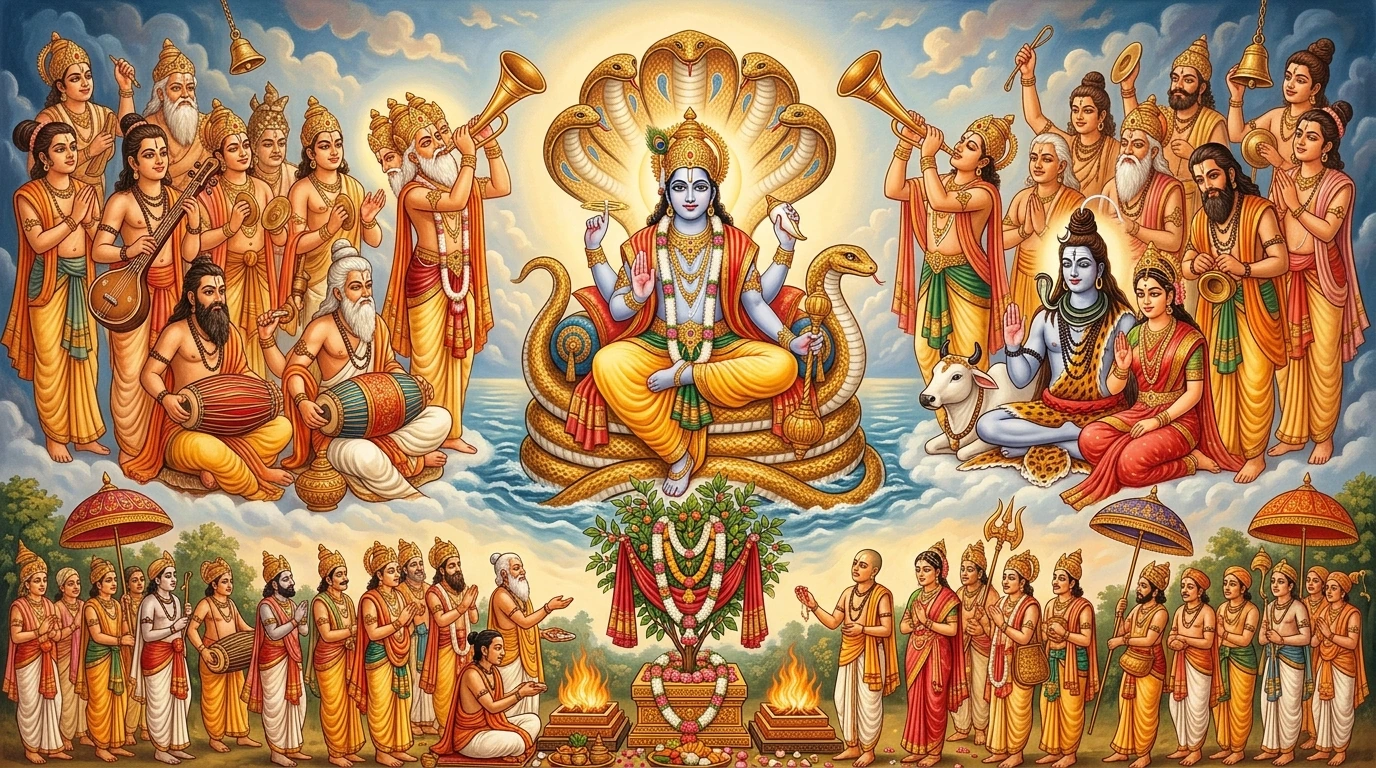
Deva Prabodhinī: Lord Śrī Hari Viṣṇu awakens from His sacred four-month cosmic Yoga Nidrā upon the golden coils of Ananta Śeṣanāga in the tranquil Milky Ocean, attended by Goddess Mahālakṣmī, heralding the auspicious Tulasī Vivāha.
*Showing Smārta date – Vaiṣṇava tradition observes on Saturday, 21 November 2026 →
Many keep a stricter fast from sunset the evening before.
Ekādaśī Sādhaka Pass
Never miss an Ekādaśī, Pāraṇā fast-break window, or sacred Purāṇic Kathā again. Direct WhatsApp alerts, personalized Sankalpas, and city wall calendars.
Receive an automated WhatsApp alert 30 minutes before your city’s Pāraṇā window opens so you never accidentally miss breaking your fast on time.
A gentle reminder 24 hours prior to avoid grains in the evening, followed by exact sunrise tithi timings on Ekādaśī morning.
Customized ritual Sankalpa text generated with your Gotra, Nakshatra, and City in your mother tongue script.
A printable, beautifully designed 1-page annual almanac calculated precisely for your city and tradition to frame on your altar.
Mark and track your 26 fasts across the year, log Nirjala/Phalāhāra vows, and preserve your annual spiritual record.
Zero spam. Only sacred fasting timings and scripture alerts directly to your phone.
The 3-Day Rhythm of Ekādaśī
According to the Padma Purāṇa, Ekādaśī is not a 24-hour fast, but a conscious three-day spiritual discipline spanning Daśamī, Ekādaśī, and Dvādaśī.
Daśamī · Purification
- Consume a single pure, sattvic meal before sunset.
- Avoid heavy grains, oils, and non-sattvic spices in the evening.
- Cultivate mental tranquility; refrain from anger, sensory overstimulation, and late-night food.
Ekādaśī · The Mahā Vrata
- Awaken in Brahma Muhūrta (96 mins before dawn) and take a cleansing bath.
- Chant the morning Sankalpa dedicating the fast to Lord Śrī Hari.
- Choose your fasting tier (Nirjala, Sajala, or Phalāhāra) based on bodily capacity.
- Engage in Japa, recitation of Viṣṇu Sahasranāma or Bhagavad Gītā, and keep a peaceful night vigil.
Dvādaśī · Pāraṇā & Completion
- Awaken before sunrise, take bath, and offer worship/dīpa to Lord Hari.
- Break the fast strictly WITHIN the auspicious Pāraṇā window shown above.
- Break fast traditionally with water, tulasi leaf, ginger, or lemon water before taking sattvic food.
- Offer charity (dāna) to the needy or pious souls to conclude the vrata merit.
The 4 Classical Fasting Tiers
Scripture prescribes fasting according to your health, age, and spiritual stage. Sincerity of devotion outweighs physical hardship.
Complete abstinence from food and water from sunrise to Dvādaśī sunrise. Observed by dedicated sādhakas and on Nirjalā Ekādaśī.
Abstinence from all solid food. Only pure water, warm water, or subtle lemon water taken as needed to sustain meditation and prayer.
Fresh fruits, cow milk, curd, nuts, and non-grain root vegetables (sweet potato, samak rice, sabudana). Zero grains or lentils.
A single sattvic non-grain meal taken in the afternoon. Permitted for elders, pregnant women, travelers, and those on medication.
Strict Scriptural Prohibitions on Ekādaśī
In the Hari-bhakti-vilāsa and Padma Purāṇa, sins of the three worlds are said to enter grains on Ekādaśī day. Even non-fasters should avoid grains.
Daily Tithi, Muhūrtams & Horizon
Śukla Pakṣa · Daśamī
followed by: Śukla Ekādaśī11:41 AM – 12:29 PM
4:44 AM – 5:32 AM
10:38 AM – 12:05 PM
2:57 PM – 4:23 PM
7:46 AM – 9:12 AM
Bearings indicate horizon degrees. Rāhu, Yamagaṇḍa, and Gulika are avoided for new auspicious beginnings; Abhijit and Brahma Muhūrta are sacred windows for pūjā, chanting, and meditation.
today, in the ancient reckoning
- Cosmic Time
अद्य · श्वेतवराह कल्पे · वैवस्वत मन्वन्तरे · कलियुगे प्रथम पादे
adya · śveta-varāha kalpe · vaivasvata manvantare · kali-yuge prathama pāde
In Śveta-varāha kalpa, Vaivasvata manvantara, and the first quarter of Kali-yuga, in the eternal presence of the Supreme Lord...
- Calendrical Time
शालिवाहन शके १९४८ · पराभव संवत्सरे · दक्षिणायने · हेमन्त ऋतौ
śālivāhana śake 1948 · Parābhava saṁvatsare · Dakṣiṇāyane · Hemanta ṛtau
In the sacred cycle of the Śaka era, current Jovian year (Saṁvatsara), solar transit (Ayana), and season (Ṛtu)...
- Astronomical Limb (Pañcāṅga) · Pañcāṅga Kāla (Daily Alignments)
मार्गशीर्ष मासे · शुक्ल पक्षे · दशमी तिथौ · शुक्र वासरे · पूर्व भाद्रपदा नक्षत्रे · हर्षण योगे · गर करणे
Mārgaśīrṣa māse · Śukla pakṣe · Daśamī tithau · Śukra vāsare · Pūrva Bhādrapadā nakṣatre · Harṣaṇa yoge · Gara karaṇe
In this sacred lunar month, fortnight, lunar day, weekday, birth star, yoga, and karaṇa...
- Sacred Locality
जम्बूद्वीपे · भारतवर्षे*
jambū-dvīpe · bhārata-varṣe (India)
In Jambūdvīpa, the sacred land of Bhāratavarṣa (India)...
*The locality lines (jambū-dvīpe bhārata-varṣe): India is shown by default; spoken aloud you substitute your own region and town.
What You Just Read: The Three Frames of Time▾
What You Just Read: The Three Frames of Time
The saṅkalpa places the moment in three nested dimensions—cosmic, calendrical, and astronomical—so the seeker knows exactly when and where they stand in eternity.
Cosmic Time (Eternal Scale)
Cosmic time doesn’t change with where you read this. Śveta-varāha is the present kalpa (~4.32 billion years). Vaivasvata is the current manvantara. Kali-yuga prathama pāda places us in the first quarter of the dark age. Identical whether recited in Bengaluru, Mumbai, London, or New York.
Calendrical Time (Solar & Seasonal Cycles)
Calendrical time tracks the present era and season: the Śaka era (from 78 CE), the 60-year Jovian saṁvatsara cycle, Uttarāyaṇa or Dakṣiṇāyana (solar transit), and the bi-monthly ṛtu (season).
Astronomical Time (The Five Limbs of Pañchāṅga)
Astronomical time is the immediate daily rhythm: māsa (lunar month), pakṣa (fortnight), tithi (lunar day), vāra (solar weekday), nakṣatra (moon constellation), yoga, and karaṇa.
Local Sunrise Reckoning & Daily Purpose
All values above are calculated for your local sunrise. The day traditionally belongs to whichever tithi prevailed at sunrise.
The saṅkalpa is the daily (nitya) opening of sacred life. Recited each morning, it re-anchors you in awareness of eternity and dedicates your actions with resolve.
Explore Sacred Knowledge
Essential guides, Purāṇic legends, and daily rules to support your spiritual practice.
26 Ekādaśī Kathās
The Purāṇic dialogues between Lord Kṛṣṇa and King Yudhiṣṭhira revealing the origin and merit of each fast.
Ekādaśī Fasting Rules
Foods permitted and avoided, water protocols, and strict Dvadasi parana opening windows.
Sacred Stotras & Chants
Dhyāna ślokas, Vishnu Sahasranama, and auspicious stotras with authentic Devanagari and regional scripts.
2026 Vrata Calendar
Full-year calendar of Ekādaśīs, Pradoṣas, Caturthīs, and Saṅkrāntis computed precisely for your location.
The Twenty-Four Sacred Ekādaśī Kathās
Ekadasi is the eleventh lunar day of each fortnight, observed by fasting across Hindu traditions. Timings here are computed from astronomical positions, not transcribed from another site. Today's panchang · Traditions · Glossary · About this site